
Thessaloniki 2036
Reconnecting Thessaloniki's heritage through climate, mobility & everyday life.
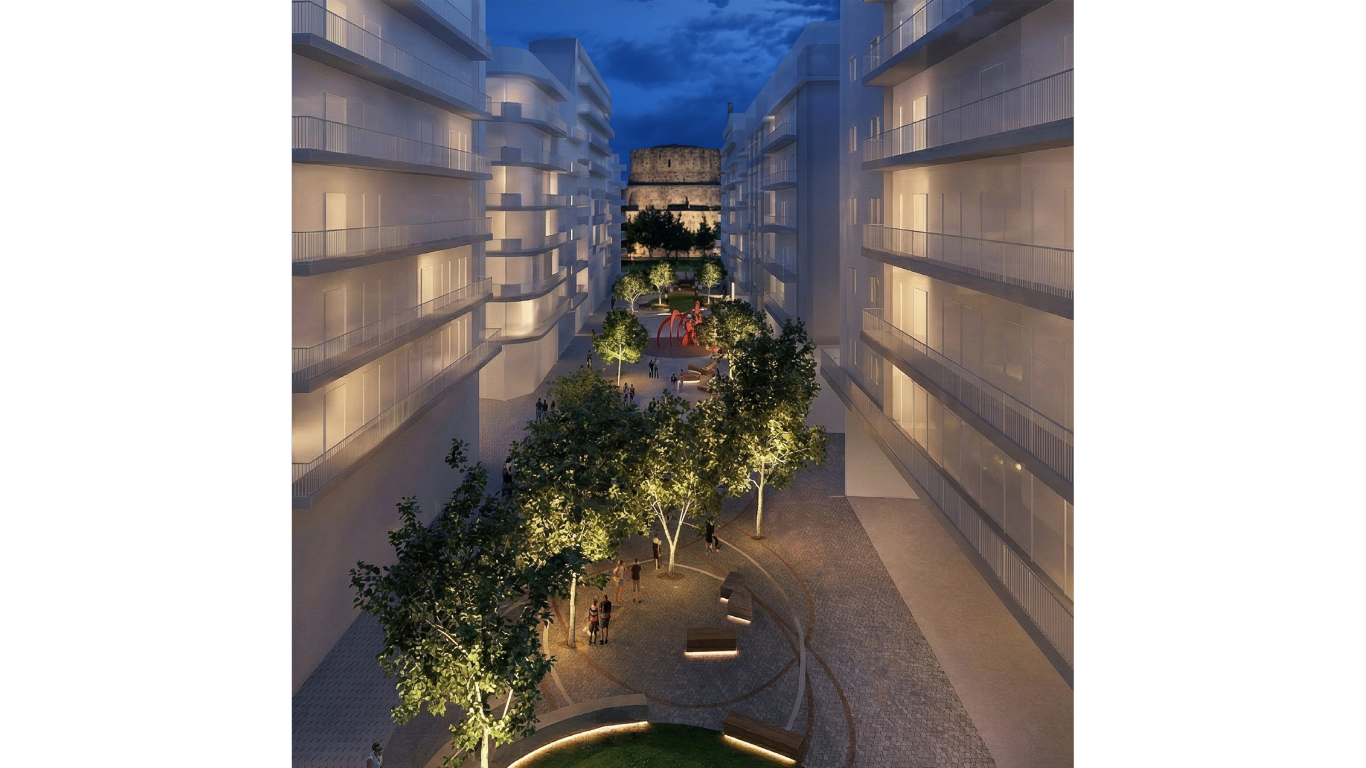
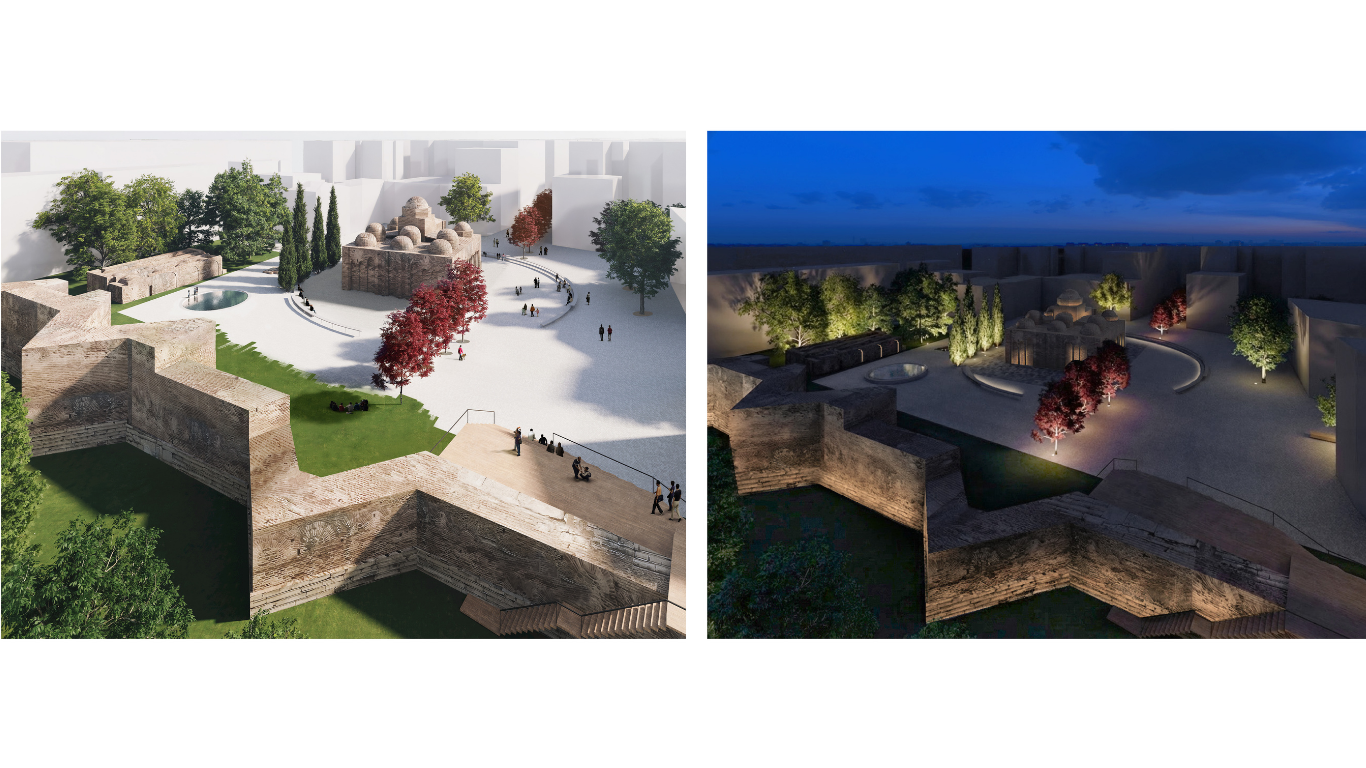
Thessaloniki 2036 is our proposal for the Greek National Ideas Competition for the integration of Thessaloniki's archaeological sites and monuments.
Developed with a multidisciplinary team of architects (mp.sparch), landscape architects, transport & environmental specialists and archaeologists, the proposal reimagines the historic centre as a Historic Urban Landscape - a living urban ecosystem where heritage, climate, movement and everyday life are inseparable.
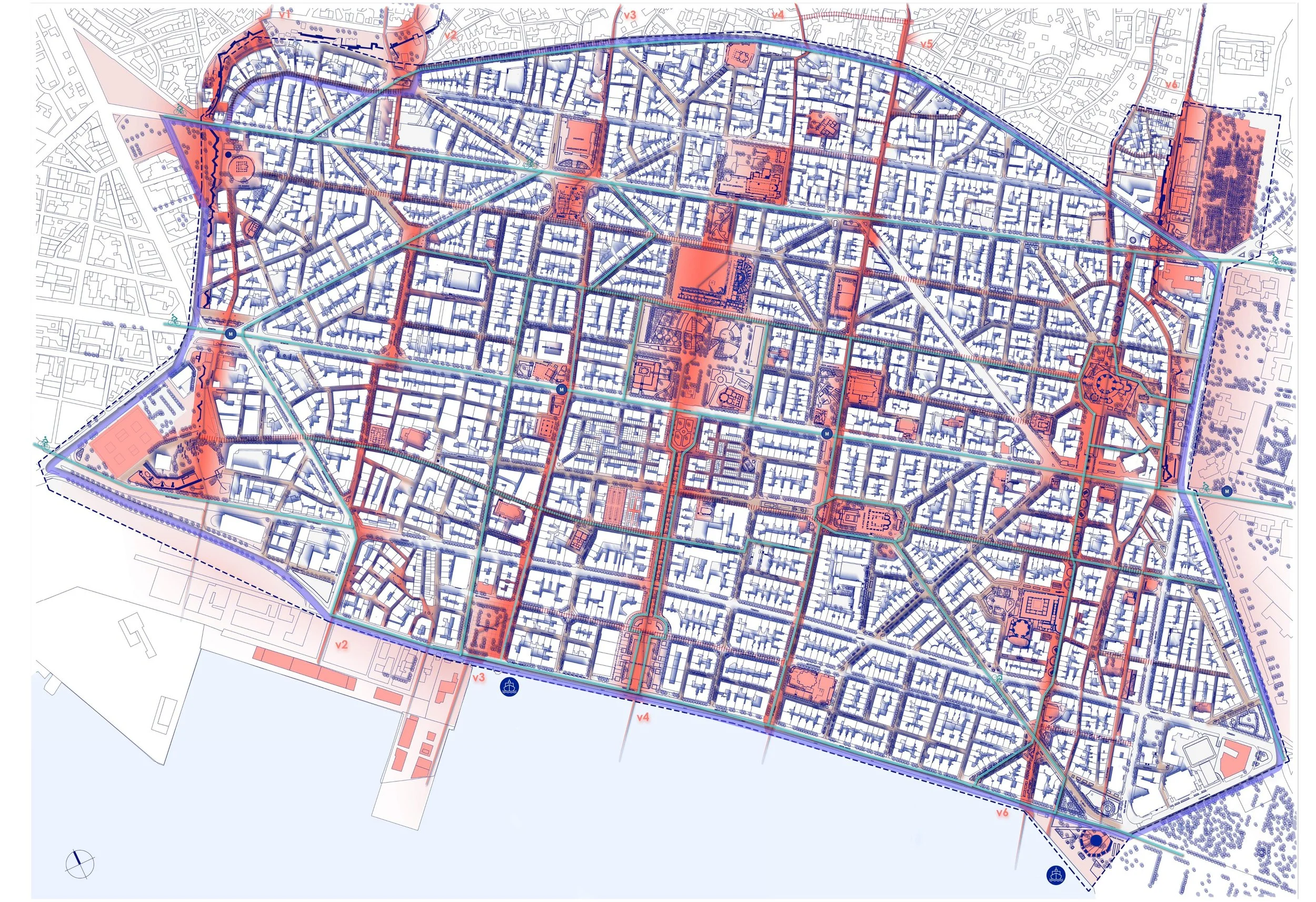
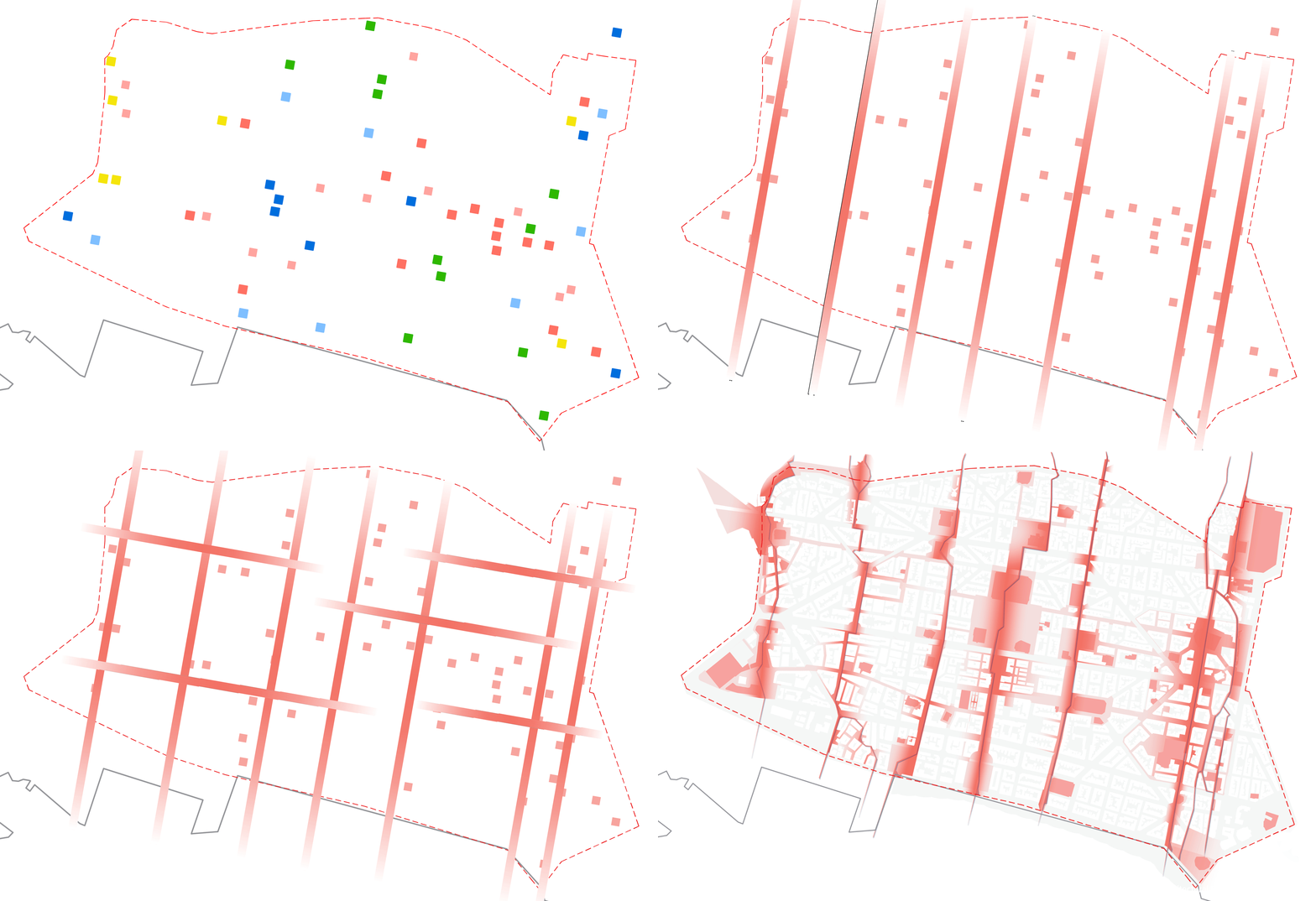
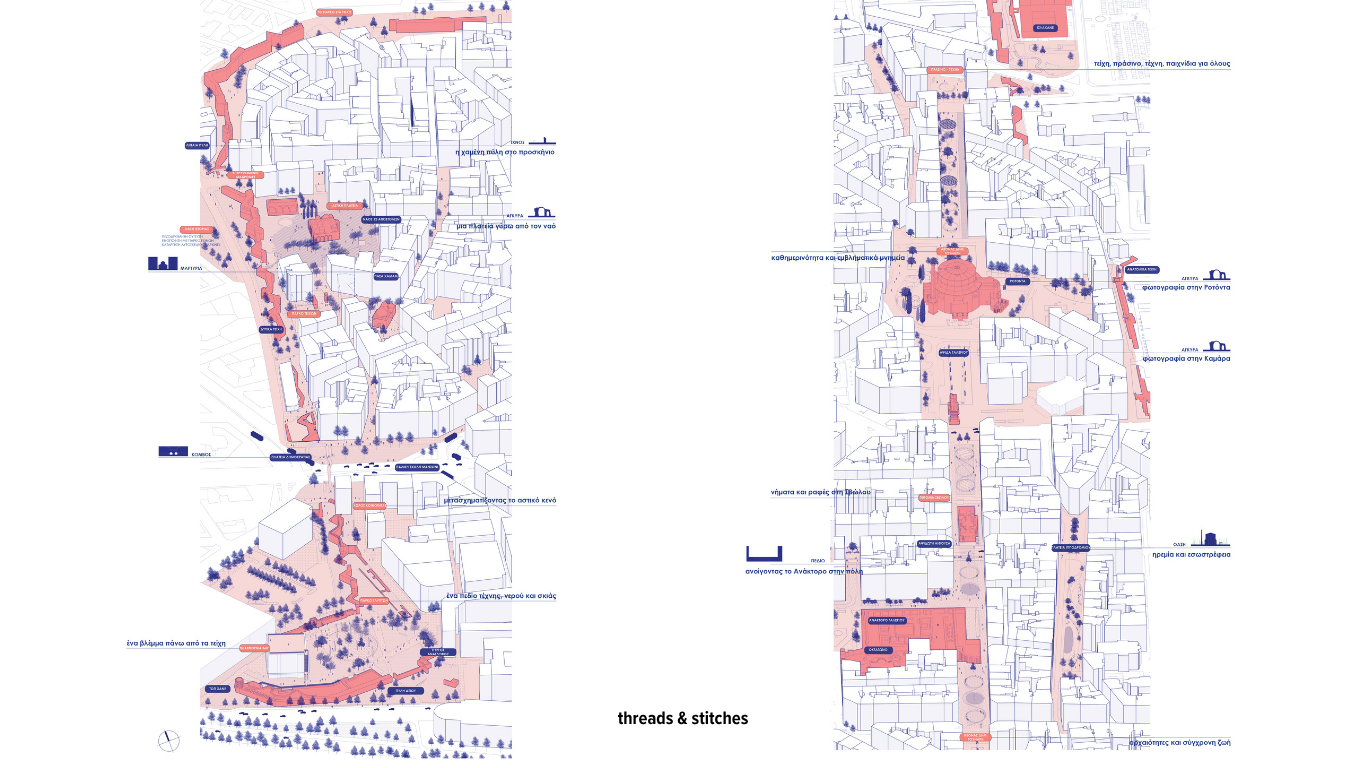
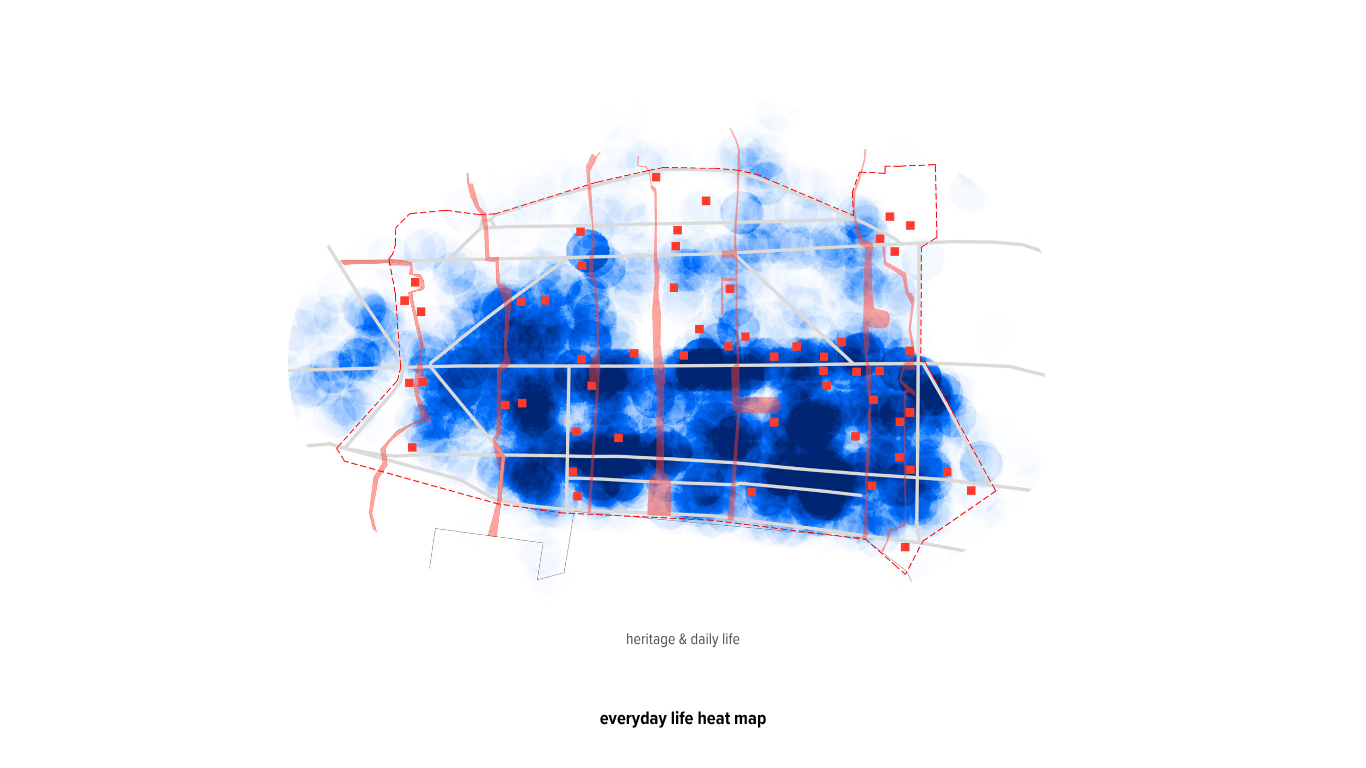
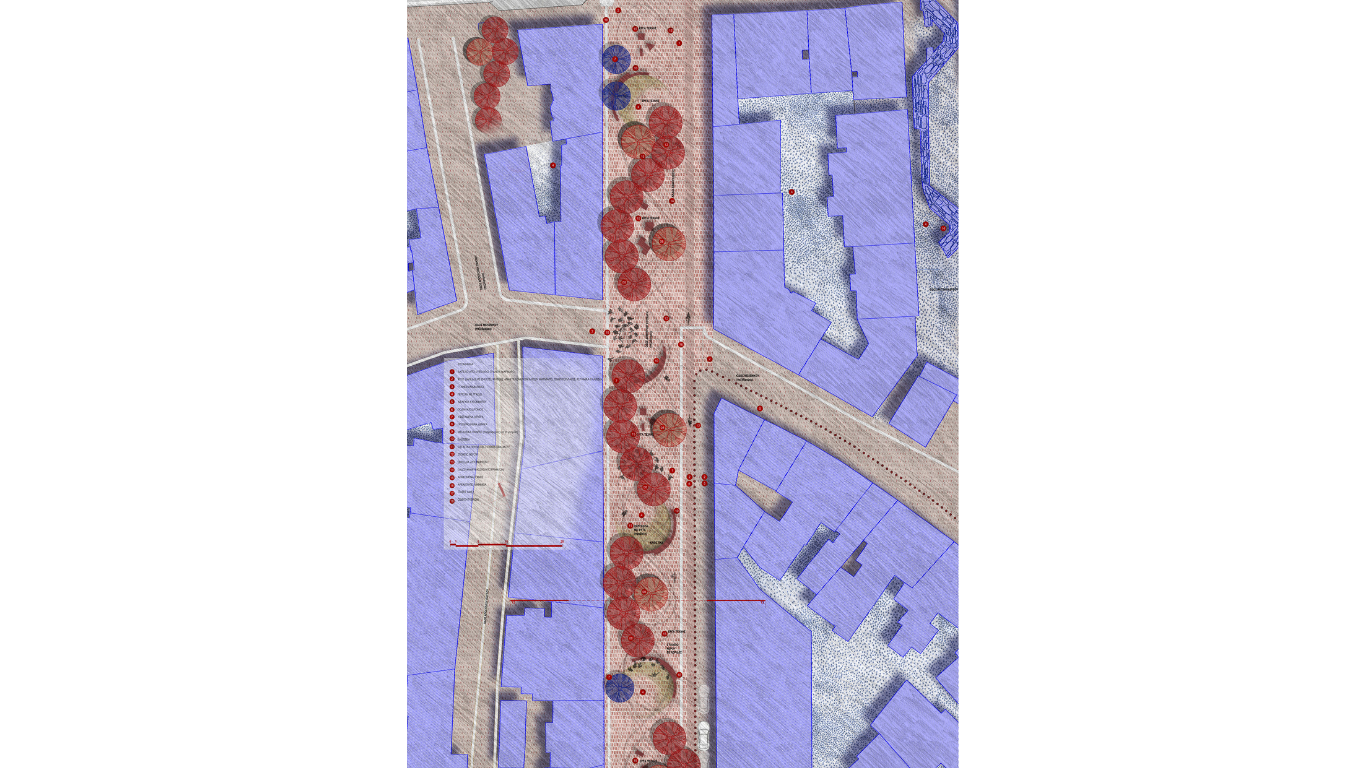
Looking towards 2036, the project establishes a long-term strategic framework organised through Threads, Stitches and the Ring: a network of north–south pedestrian routes, east–west urban connections and a metropolitan mobility loop that reconnects monuments with the rhythms of daily life.
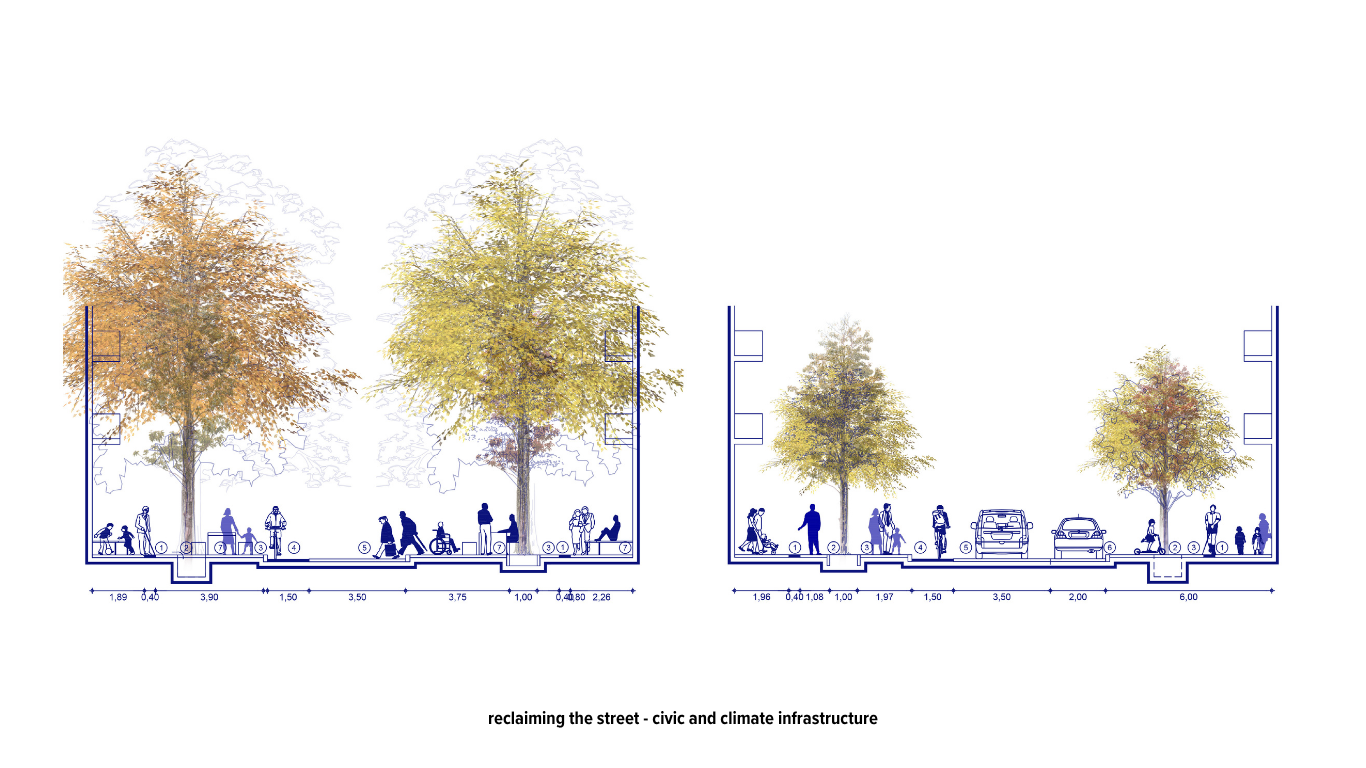
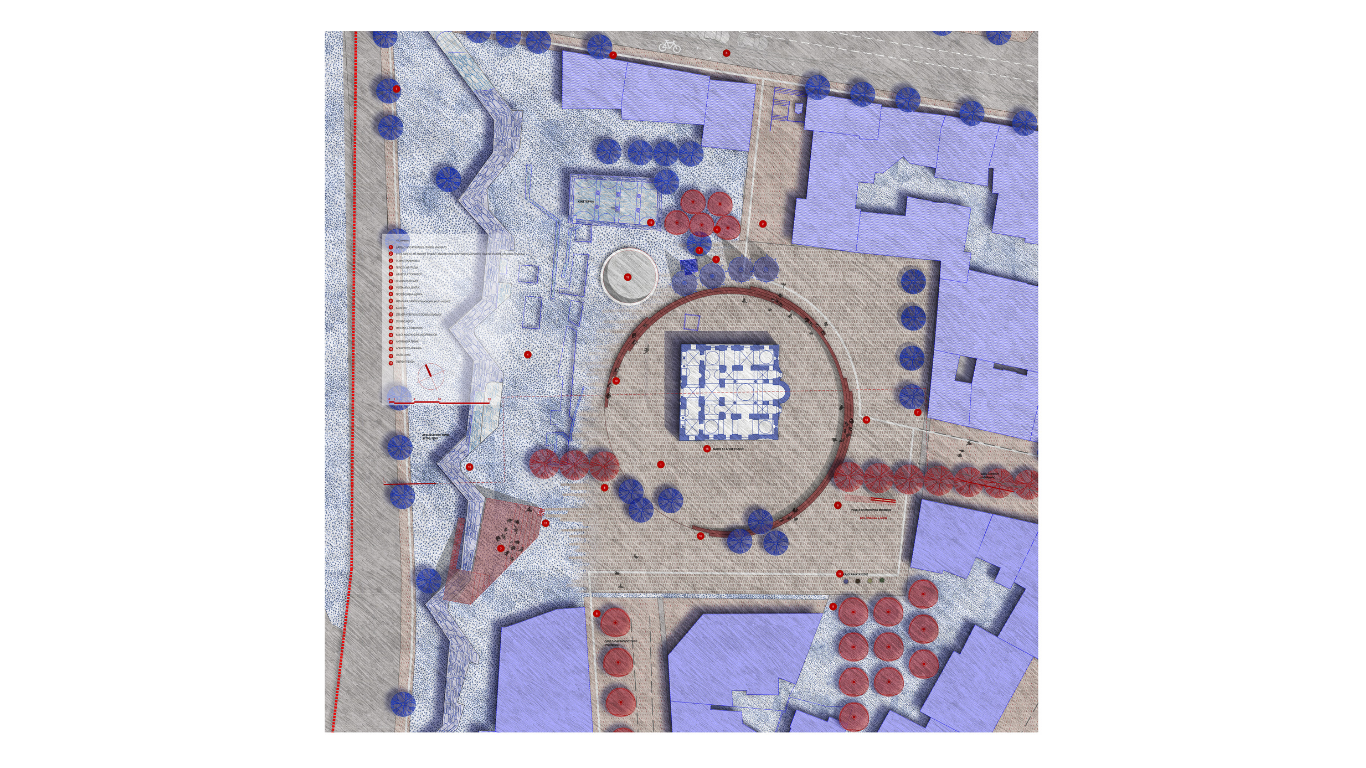
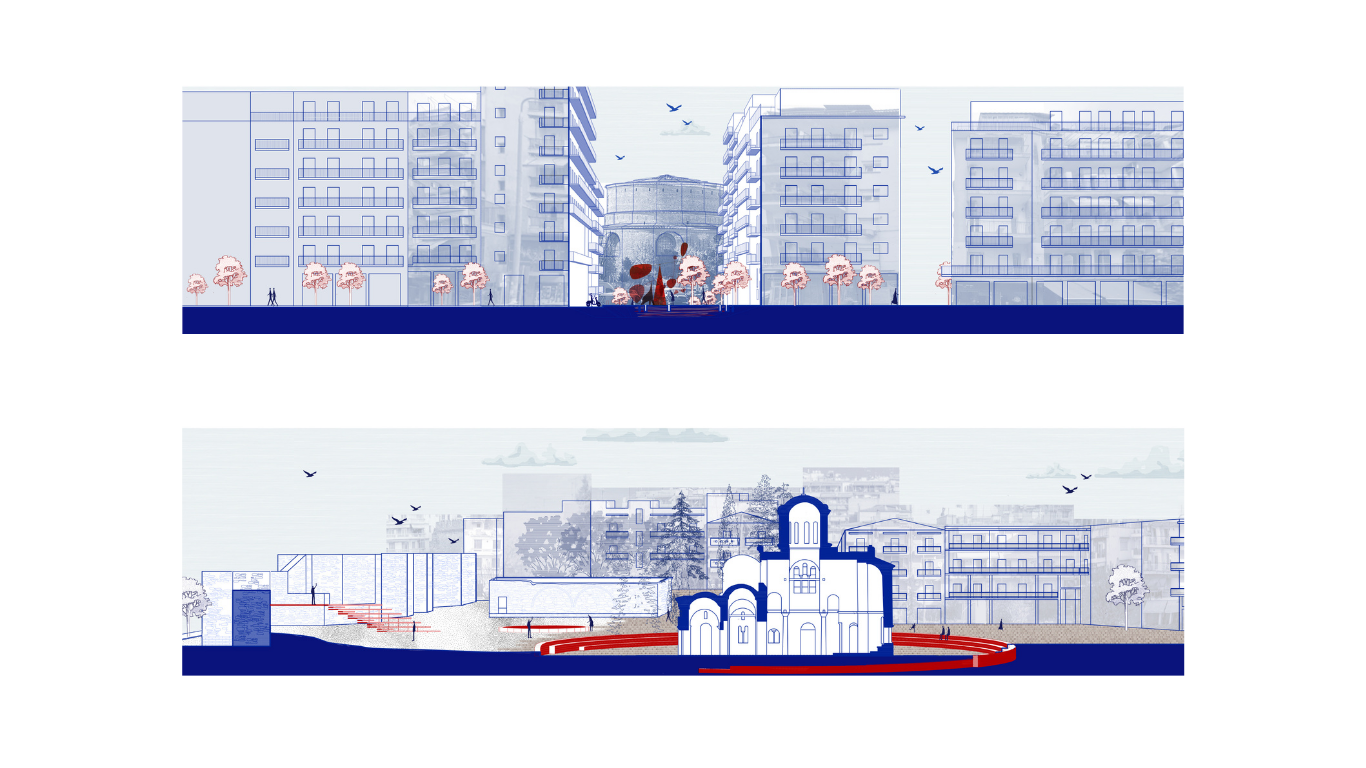
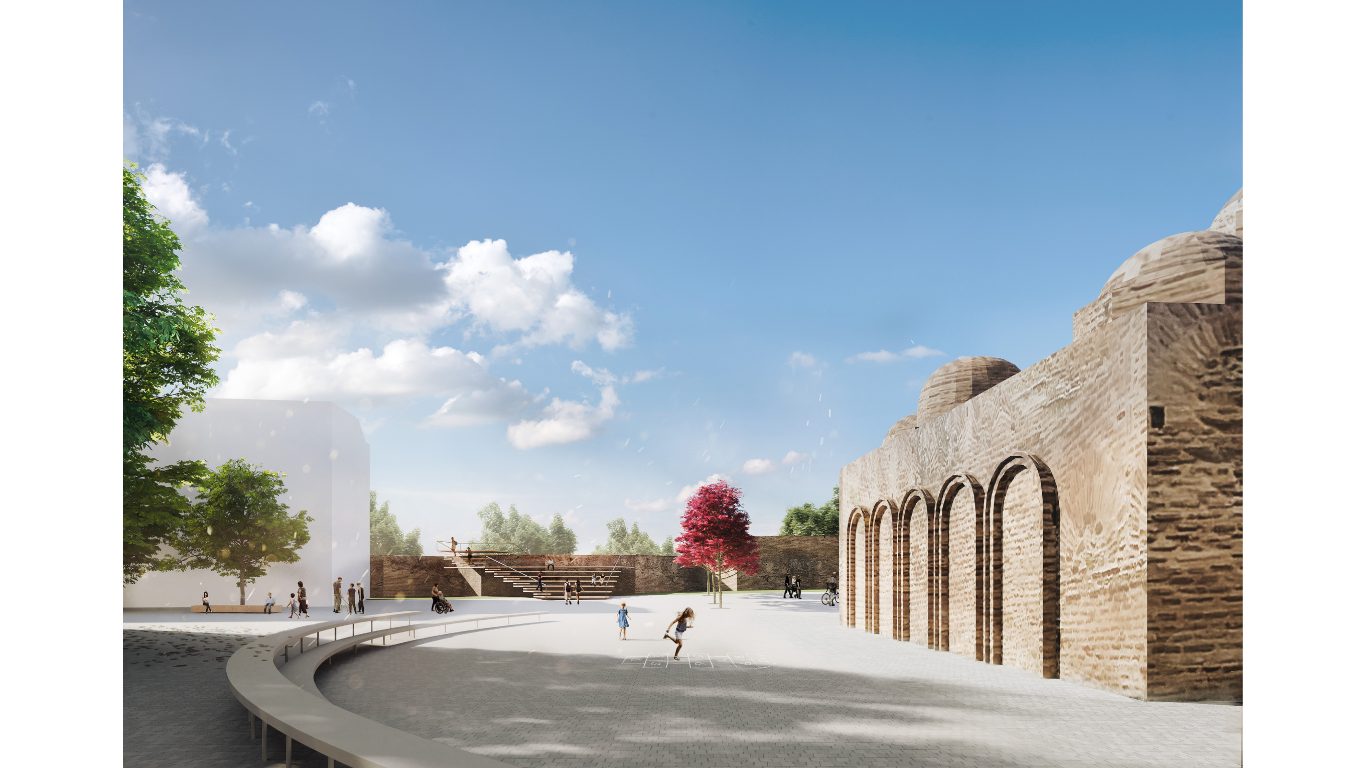
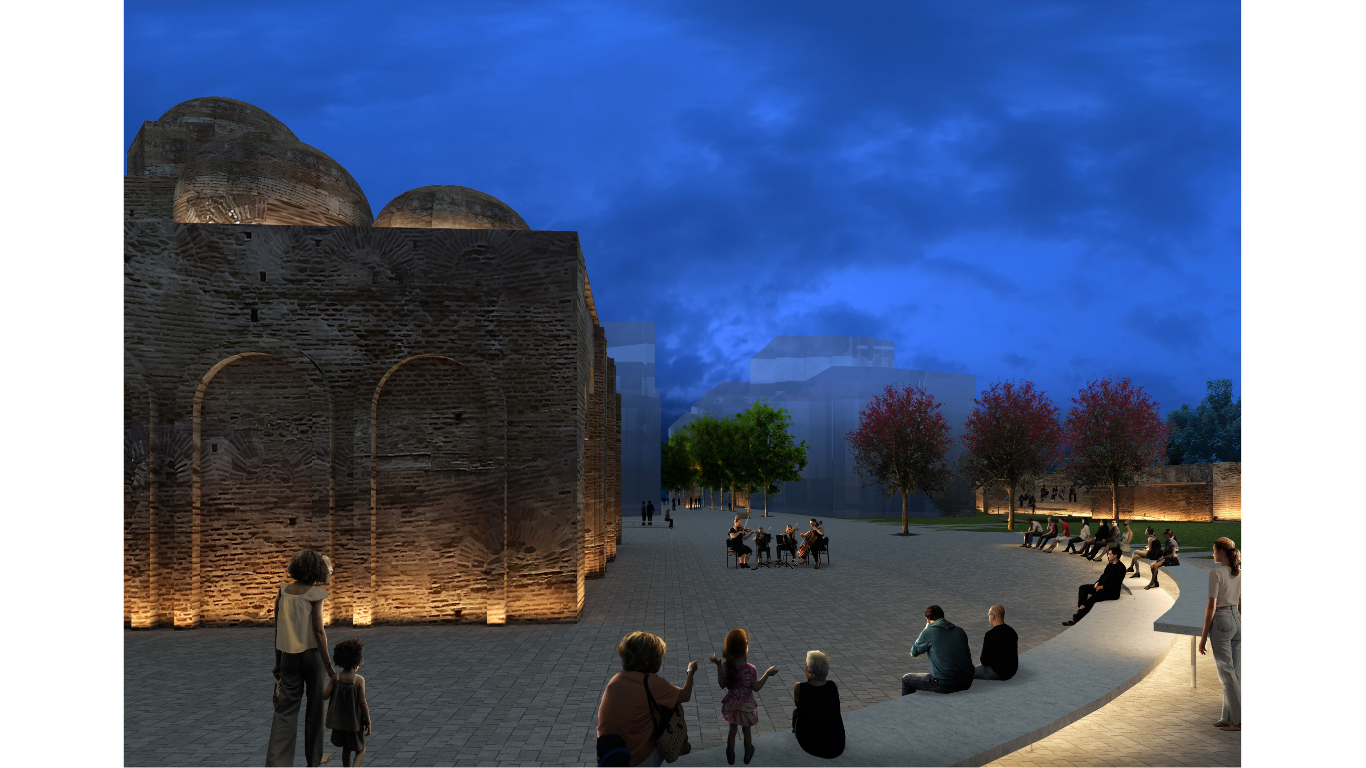
The proposal begins with a simple idea: heritage is part of the city's civic infrastructure. Archaeological sites become places of orientation, shade, cooling, gathering, storytelling and ecological value - working as part of the everyday city while revealing Thessaloniki's layered history.
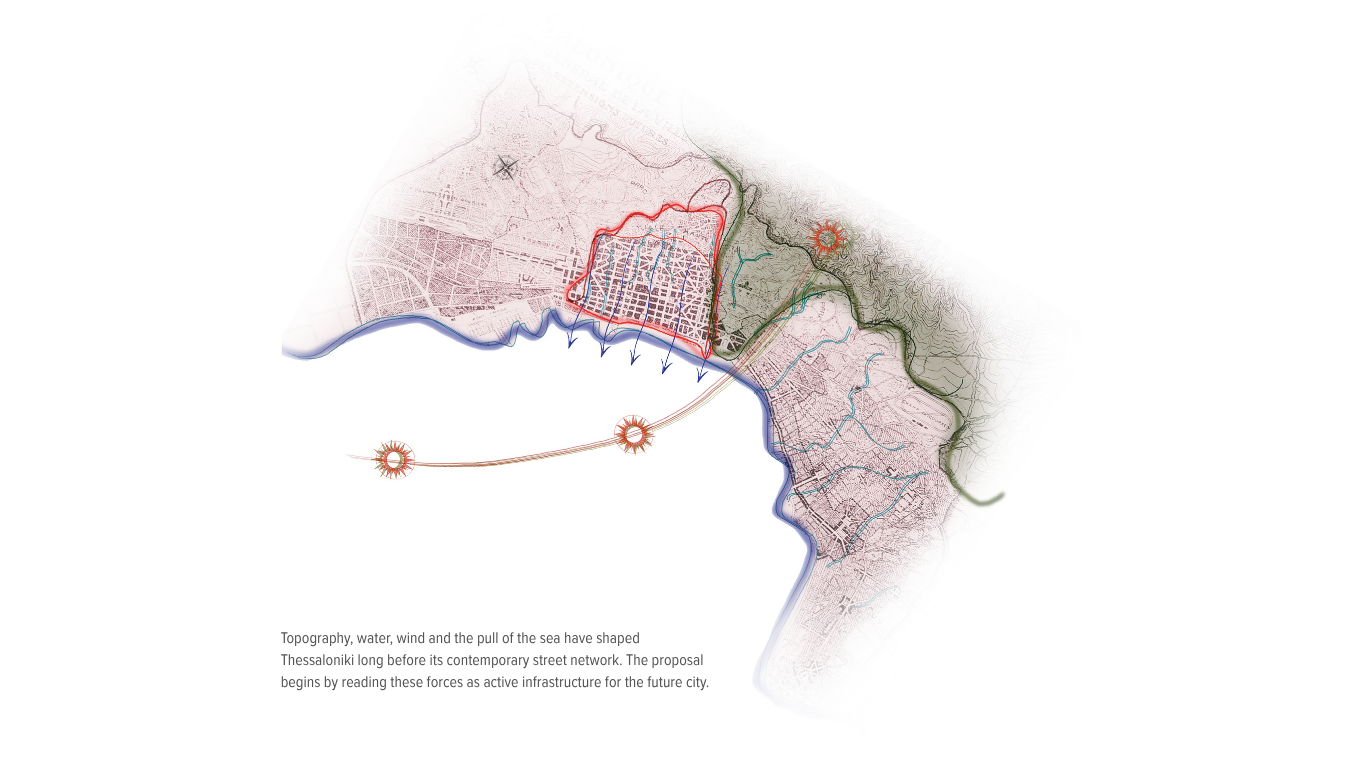
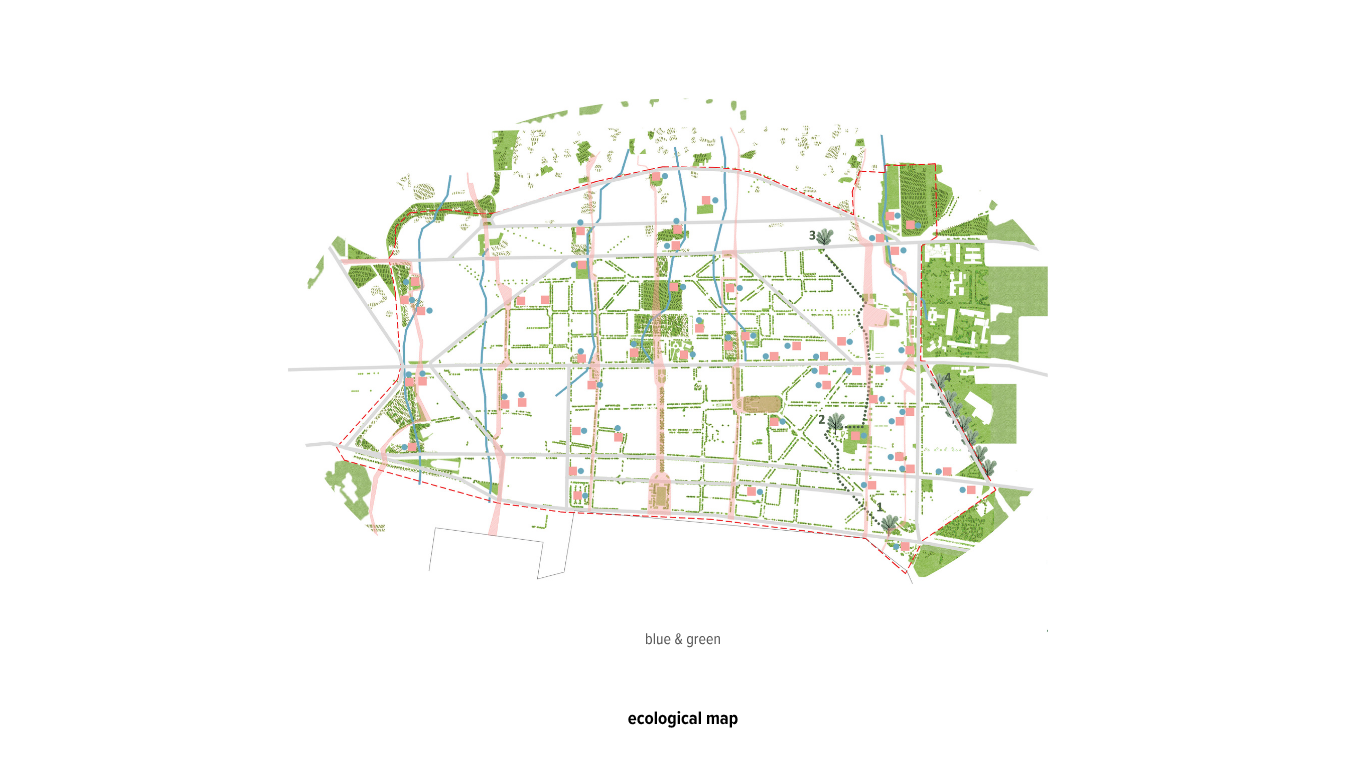
Grounded in the city's natural systems, the strategy is shaped by topography, prevailing winds from Mount Hortiatis and the hidden traces of historic watercourses. Green infrastructure, sustainable drainage, biodiversity, permeable surfaces and water-sensitive design create a more resilient public realm while helping to protect archaeological heritage.
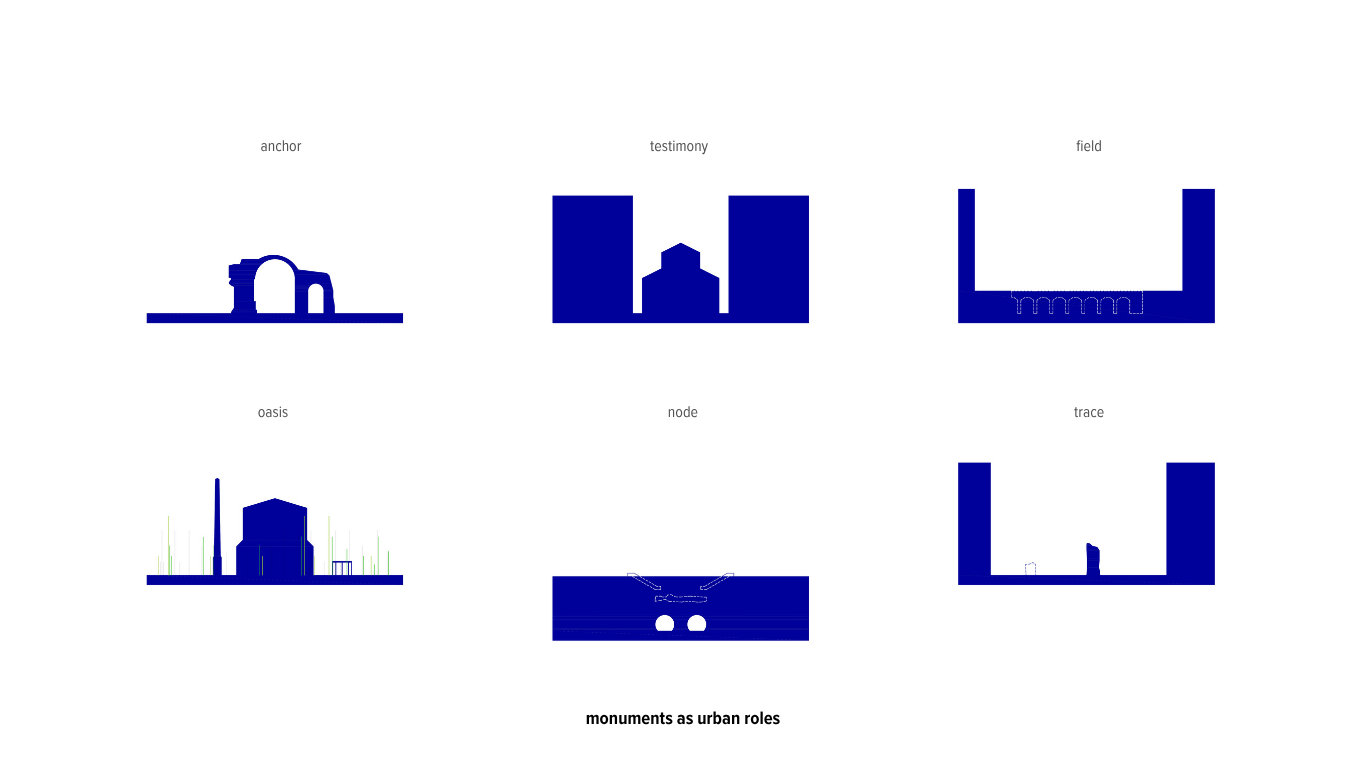
The proposal understands each monument through its urban role - as anchors, fields, nodes, oases, traces or testimonies. This flexible framework allows every place to respond to its own history, context and patterns of use while contributing to a coherent identity across the city.
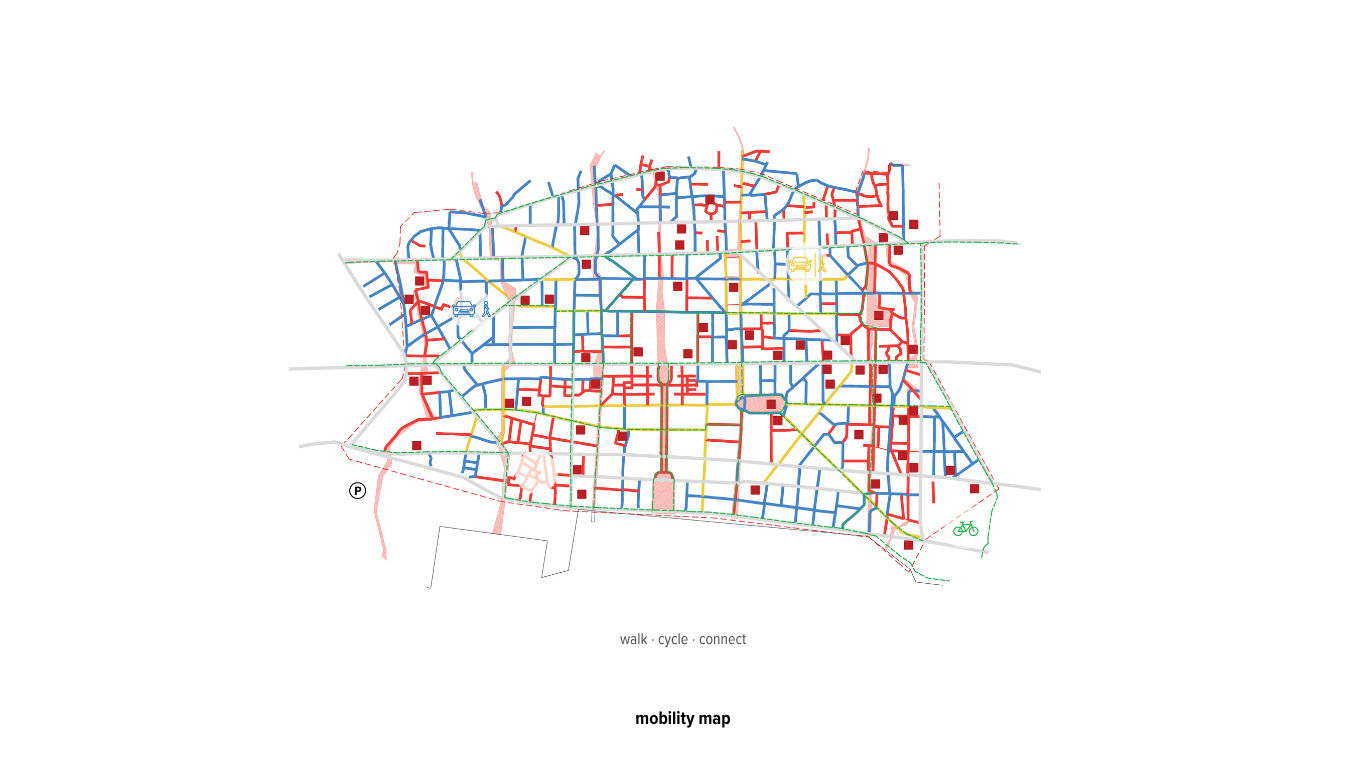
Mobility forms another key layer of the strategy. Walking, cycling, public transport, metro, water transport and low-speed streets are brought together within an integrated network that improves accessibility, strengthens neighbourhood connections and encourages public life.
Materially, the proposal embraces circularity, reversibility and low-carbon construction. Reclaimed stone, recycled materials, lightweight modular interventions and principles of urban mining draw inspiration from Thessaloniki's long tradition of reuse (spolia), creating interventions that are adaptable, repairable and environmentally responsible.
More than a masterplan, Thessaloniki 2036 is a framework for long-term stewardship. Phased implementation, community participation and ongoing care recognise that historic cities are sustained not only through conservation, but through everyday use, collective ownership and continuous adaptation.
The project reflects MAZi's approach to regenerative urbanism: designing places where environmental resilience, cultural heritage and everyday life reinforce one another.
“Heritage is not something we visit. It is something we inhabit.”
Urban Strategy | Heritage-Led Masterplan & Public Realm
Typology
2026
Year
Thessaloniki, Greece
Location
Despoina Papadopoulou, Morfo Papanikolaou, Giorgos Papanikolaou
Core Design Team
-
Zoi Karakinari, Landscape Architect
Alexandros Sdoukopoulos, Transport Consultant
Eleni Verani, Urban planner
Aglaia Grigoriou, Archaeologist
Georgios Nikolaidis, Civil Engineer
Georgios Andreasis, Mechanical Engineer
Evthymios Moutsakis, Environmental Engineer
Eleni Kostitsi, Archaeologist
Christos Avgeros, Archaeologist
Eleni Tryfon, Agronomist
-